
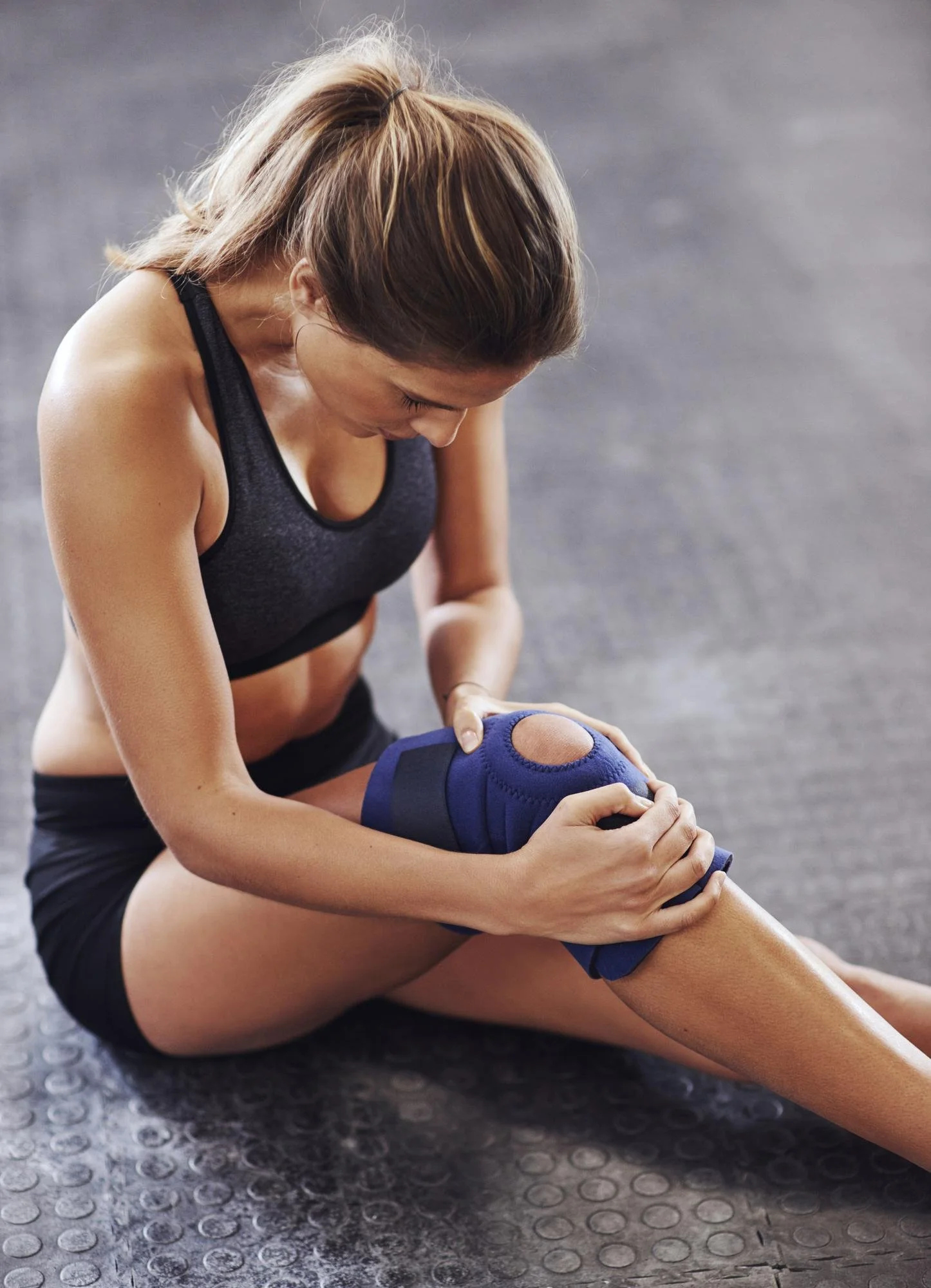
Post-Surgical Recovery Therapy in Austin
Surgery fixed the structural problem; now rehab has to restore capacity, confidence, and day-to-day function. Post-surgical recovery therapy at Workhouse Wellness blends orthopedic evaluation, evidence-based exercise progressions, manual therapy, and clear milestones so you return to work, sport, and life across Austin, Westlake, and Rollingwood—safely and on schedule.
Why post-op PT matters
After an operation, tissues need time, the right kind of loading, and smart guardrails. Without targeted rehab, people often regain range of motion but not strength symmetry, or they return to activity before the surgical site (and the kinetic chain around it) is ready. That’s how lingering pain and re-injury happen.
Authoritative guidance is aligned on the “why” behind structured post-op rehab:
Cleveland Clinic: Physical therapy is a combination of “exercises, stretches and movements” that increase “strength, flexibility and mobility,” helping you move more safely and confidently after an injury or surgery. Cleveland Clinic
AAOS OrthoInfo (rotator cuff example): early phases often emphasize passive motion first, then active and strengthening as the repair tolerates load, with specific timelines from your surgeon. OrthoInfo
CDC (DVT prevention): “Move around as soon as possible after… surgery” to reduce clot risk; mobility is a safety issue, not just a fitness goal. CDC
Our job is to sequence the right motion and loading at the right time for your procedure—coordinating with surgical protocols while accounting for your history, pain response, and goals.
Procedures we commonly support
Upper extremity
Rotator cuff repair, biceps tenodesis, labral repair
Shoulder arthroscopy/decompression, stabilization procedures
Ulnar collateral ligament (UCL) care, elbow arthroscopy
Spine
Cervical/lumbar microdiscectomy, laminectomy, fusion (per surgeon protocol)
Lower extremity
ACL/meniscus, MPFL reconstruction, multi-ligament knee
Total knee/hip arthroplasty (TKA/THA) and partial replacements
Achilles tendon repair, ankle stabilization, ORIF after fracture
If your procedure isn’t listed, ask—we routinely align to physician protocols and will obtain specifics when needed.
Our approach: protect → restore → rebuild → return
1) Protect the repair and set baselines
We start with your operative report (if available), surgeon precautions, pain management plan, and early mobility rules. Baseline measures include pain, swelling, wound status (if applicable), protected range of motion, strength where allowed, gait or activity tolerance, and risk screens (e.g., DVT/PE red flags per CDC guidance). Early sessions emphasize safety, edema control, protected mobility, and teaching you exactly what is—and isn’t—okay this week. CDC
2) Restore mobility (without over-stretching)
In phase one, range of motion returns under control: passive first when indicated, then active-assist and active as tissues permit. Manual therapy and joint mobilization (graded) reduce pain and capsular stiffness; soft-tissue work improves glide. We use movement dosage (reps/holds, frequency) that honors time-based tissue healing and your surgeon’s protocol—no heroics, just steady gains.
3) Rebuild capacity with progressive loading
Strength and tendon/bone load tolerance return in a progression from isometric → isotonic (concentric/eccentric) → heavy-slow resistance as appropriate. We add balance, proprioception, and neuromuscular re-education so better mechanics become automatic. StatPearls summarizes the principle: therapeutic exercise is prescribed to correct impairments and restore musculoskeletal function. NCBI
4) Return to function, work, and sport
Late-phase rehab maps to your real life: stairs, lifting, overhead reach, squatting with load, or running and change-of-direction. We set criteria for each progression (pain under control, swelling stable, range targets met, strength/limb-symmetry thresholds, task tolerance). For joint replacements, that may be sit-to-stand speed and community ambulation; for ACL, jump/landing symmetry and deceleration control; for rotator cuff, pain-free overhead strength and endurance.
What a typical timeline looks like (example)
Weeks 0–2: Safety & swelling control
Precautions review, wound care guidance (per surgeon), edema control, breathing/positioning
Gait training or sling education; protected ROM (passive/assist) where indicated
Home plan: short, frequent sessions you’ll actually complete
Weeks 2–6: Motion + early activation
Gradual ROM goals; scapular/hip/core activation; isometrics for safe muscle groups
Manual therapy for capsular and soft-tissue restrictions as permitted
Normalize gait and daily mechanics; begin light task-specific drills
Weeks 6–12: Strength + capacity
Eccentric and heavy-slow resistance progressions (as allowed)
Balance/proprioception and neuromuscular re-ed (landing mechanics, brace/hinge patterns)
Workplace or household task simulations; reintroduce low-impact cardio
Weeks 12+: Return to life/sport
Higher-speed exposures, plyometrics/change-of-direction if relevant
Endurance and work capacity; final independence plan (maintenance strength + mobility)
Note: Your surgeon’s protocol always rules the timeline. For example, AAOS notes passive exercise commonly begins in the first 4–6 weeks after rotator cuff repair, with active motion and strengthening phased in later. OrthoInfo
Techniques we use (matched to healing stage)
Manual physical therapy (joint mobilization I–IV, soft-tissue/IASTM) to reduce pain and stiffness and enable ROM targets
Therapeutic exercise sequenced to tissue healing—starting with isometrics and progressing to eccentrics and heavy-slow resistance as appropriate NCBI
Neuromuscular re-education for balance, proprioception, coordination, and movement quality
Gait training and assistive device progression after lower-extremity procedures
Scar mobility/desensitization and swelling management where indicated
Activity and load management with clear “green/yellow/red” rules so you don’t guess
How we reduce common post-op risks
DVT/PE: early mobilization, calf pumps, and walking progressions as permitted. CDC: “Move around as soon as possible after… surgery.” CDC
Stiffness & arthrofibrosis: early, appropriate ROM dosing and capsular work; emphasis on frequent, low-irritability home sessions
Strength asymmetry: progressive loading with objective testing, not just “feel”
Fear of movement: education and graded exposure so confidence returns alongside capacity
Enhanced-recovery research reinforces that coordinated peri-operative rehab reduces complications and shortens length of stay—the same principles apply after you’re home. PubMed Central
Local relevance: Austin routines, Westlake/Rollingwood schedules
Access: before-work and late-day options near Westlake/Rollingwood; concierge in-home sessions in Austin when clinic travel isn’t feasible in early weeks
Real-world goals: stairs at the office, commuting MoPac pain-free, getting back to Town Lake walks/runs, returning to the gym without setbacks
Integrated care: Many clients layer Massage Therapy for recovery and Performance Recovery for assisted mobility and tissue work between PT visits—without violating surgical precautions
For HR leaders planning return-to-work pathways after surgery, see Corporate Wellness & Group Programs.

Pricing & Scheduling
Premium 1:1 orthopedic PT in Westlake/Rollingwood. We’ve added a 45-minute follow-up at $165 to improve access without diluting our standard 60-minute session. The 8-Pack is the best economic value, and the 75-minute Integration Session is the clinical workhorse for complex cases.
Services & Rates
| Session | Duration | Rate | What it’s for |
|---|---|---|---|
| Initial PT Evaluation | 60 min | $215 | Orthopedic exam, movement testing, plan of care, first treatment. |
| Follow-Up PT Session | 45 min | $165 | Standard progression: strengthening, manual therapy, neuromuscular re-ed. |
| Follow-Up PT Session | 30 min | $125 | Focused re-assessment or tune-up to support progress. |
| In-Office PT Session | 60 min | $215 | Full session for complex cases or multi-region work. |
| Integration Session (PT + Manual) | 75 min | $250 | Extended time to combine joint/soft-tissue work with progressions. |
| Concierge PT (in-home/on-site) | 60 min | $275 | Same as in-office care, delivered at home or workplace in Austin area. |
| Physical Therapy Package | 8 visits | $1,560 (=$195/visit) | Best value for consistent, results-driven care. |
HSA/FSA welcome. Superbill available on request. For teams and clubs, explore Corporate Wellness & Group Programs for on-site injury-prevention screens and return-to-work pathways.
Physical Therapy FAQs
Q: When should post-op PT start?
A: Your surgeon’s protocol sets the start. Many procedures begin gentle mobility and education within days to weeks; strengthening phases follow once tissues can tolerate load. Example: AAOS notes passive exercise often begins in weeks 4–6 after rotator cuff repair, with later phases adding active motion/strength. OrthoInfo
Q: How hard should early exercises feel?
A: Early work should be low-irritability—mild discomfort is okay; sharp pain, increasing swelling, or night pain that worsens is not. We adjust volume and technique so you progress without provoking inflammation.
Q: Is manual therapy enough by itself?
A: No. Manual therapy reduces pain and stiffness, but long-term outcomes come from progressive strengthening and neuromuscular re-education aligned to your surgery and goals. NCBI
Q: How do you reduce clot risk after surgery?
A: We pair movement with physician-directed prevention (medication/compression when indicated). The CDC is clear: “Move around as soon as possible after… surgery.” CDC
Q: How long until I’m “back to normal”?
A: It depends on the procedure and your pre-op status. Many people regain daily independence in 6–12 weeks; higher-demand tasks/sports may require 3–6+ months with criteria-based milestones (symmetry, task tolerance, surgeon clearance).
Q: Can you coordinate with my surgeon?
A: Yes. We align to your protocol and share progress updates. If something isn’t tracking as expected, we communicate promptly so the care team can adjust.